Getting Wide-Format Low-E Glass Heating Right
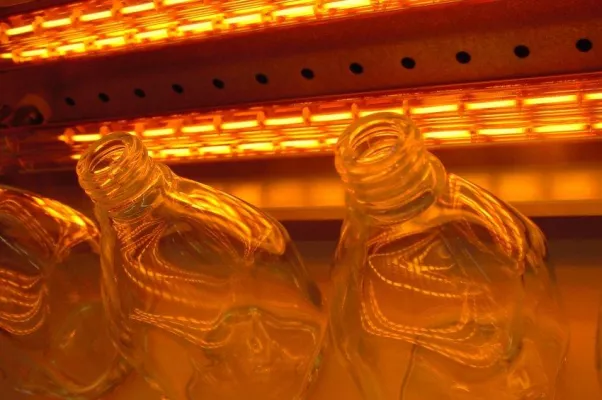
If you’re trying to preheat Low-E glass on a scale of 3 meters or more, you already know the struggle. You need the heat to be dead-on consistent across the whole width. But here’s the problem: standard, off-the-shelf lamps just can’t handle it. You end up with cold spots and weird thermal gradients that mess up your glass. That’s why we build custom, continuous infrared units. We basically kill the “cold spot” problem before it starts.
The struggle with long lamps
When you push a heating element past 3 meters, things get tricky. You start dealing with voltage drops and mechanical stress. If you aren’t careful, the ends of the lamp run cooler than the middle, and suddenly your heat distribution is all over the place. To fix this, we get obsessive about the internal filament winding and voltage. We make sure the wattage per meter stays the same from end to end. We also use high-grade borosilicate glass for the envelope. Why? Because it handles thermal shock way better than standard quartz. When your line is running 24/7, that durability is the only thing keeping you from a midnight breakdown.
Making it actually work
We don’t just “stretch” a lamp and hope for the best. That’s a recipe for a burnout. Instead, we balance the electrical load. We often use multi-circuit wiring or specific voltage setups so the tube doesn’t fry at the connection points. Depending on how deep you need that heat to soak into the glass, you can go with short-wave or medium-wave emitters. It’s all about how you want the glass to react.
A few things to watch out for
Once you’re installing these 3-meter+ units, your mounting frames have to be rock solid. If the tube sags even a little, your heat flux becomes uneven. And in this business, uneven heat usually means broken glass. Then there’s the power. Make sure your supply can actually handle the total load of these extended arrays. You want high heat density, but that puts a massive strain on your cooling fans and ventilation. If your airflow isn’t dialed in, your lamp sockets will overheat. And once that happens, the lifespan of your unit plummets. It’s a simple fix, but it’s the one thing people usually forget.